Smart parcel lockers — the future of secure delivery.
Electronic locker banks are changing how Australia receives parcels. Here is how they work, who they suit, and what to look for.
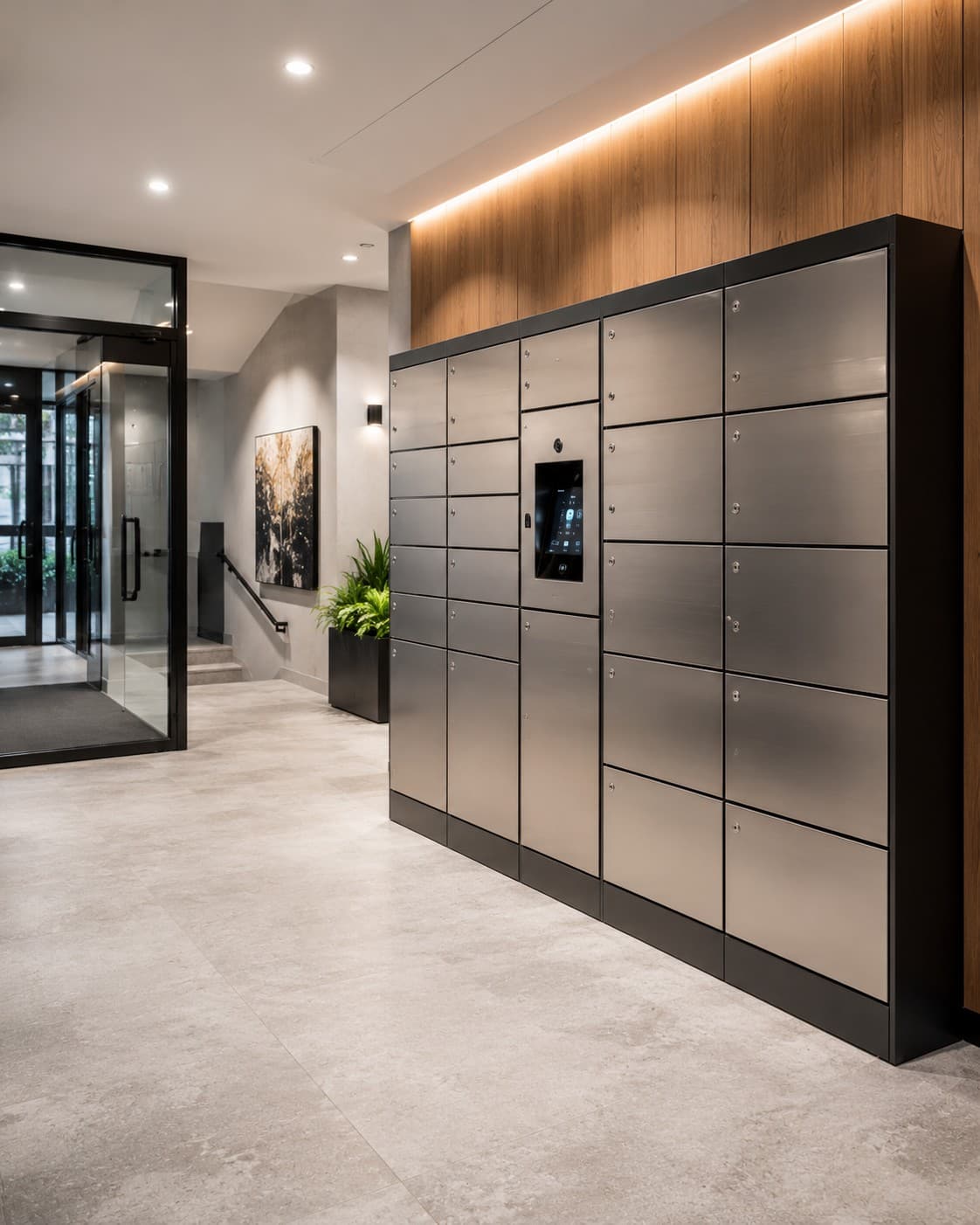
Smart parcel lockers are electronic locker banks that allow couriers to securely deposit parcels without the recipient needing to be present. They are increasingly common in apartment buildings, offices, universities, shopping centres and residential developments across Australia — and for good reason. They eliminate missed deliveries entirely, work with every major courier company, and require zero management from recipients beyond collecting their parcel at a time that suits them.
How do smart parcel lockers work?
The process is designed to be frictionless for both the courier and the recipient. When a courier arrives with a delivery, they interact with a touchscreen terminal on the locker bank. They scan the parcel barcode or enter a delivery code, and the system automatically assigns and opens an available locker of the appropriate size. The courier places the parcel inside and closes the door — which locks automatically.
The system then sends a notification to the recipient, usually via SMS or a connected app, containing a unique collection code. The recipient arrives when it suits them, enters the code at the terminal, and their locker opens. The parcel is retrieved, the locker resets, and the system is ready for the next delivery.
The entire process is logged electronically — delivery time, courier identity, collection time and recipient — giving both building management and residents a complete audit trail for every parcel.
Who benefits most from smart parcel lockers?
Apartment buildings
The most common installation point in Australia. A single locker bank in the lobby eliminates the communal delivery chaos that plagues many apartment complexes and gives every resident a reliable, secure way to receive parcels regardless of when they are home.
Office buildings
For businesses receiving frequent deliveries or for staff who use their workplace address for personal deliveries, smart lockers remove the need for a dedicated mailroom or receptionist to manage incoming parcels. They also work well for internal distribution — dispatching items between departments or across floors without requiring a courier.
Universities and student accommodation
High-density living with predictably inconsistent hours makes student accommodation one of the strongest use cases for smart locker systems. Many Australian universities have already installed locker banks in campus buildings and student residential complexes.
Mixed-use developments
Developments combining retail, residential and commercial tenancies increasingly include smart parcel locker infrastructure as a standard amenity — positioned to serve all users from a central, accessible location.
Key features to evaluate
Locker size mix
A well-designed locker bank includes multiple compartment sizes — small for envelopes and small packages, medium for standard courier parcels, large for bulkier items. Getting the mix right for the expected delivery volume and package sizes of your users is critical. Too few large lockers and the system backs up quickly. Too few small lockers and smaller deliveries take up premium space.
Courier compatibility
The best systems are carrier-agnostic — compatible with Australia Post, DHL, StarTrack, CouriersPlease, Aramex, Amazon and all major platforms. Avoid systems that only work with specific carriers, as this creates gaps that defeat the purpose of the installation.
Notification system
SMS notification is the most universally reliable. App-based notifications are convenient but require residents to download and maintain the app. The best systems offer both, with configurable preferences per user.
Uncollected parcel management
Lockers fill up if parcels are not collected promptly. Look for systems that automatically escalate notifications for uncollected items after a set period and provide building management with visibility into locker occupancy in real time.
Installation considerations
Smart locker banks require a permanent power supply for the electronics, touchscreen terminal and connectivity. They need to be positioned where couriers can access them during business hours without requiring authorised building entry — typically in a lobby, foyer or covered outdoor area near the building entrance.
Most reputable suppliers will conduct a site assessment before quoting, taking into account available space, power supply, courier access patterns and expected delivery volumes. Installation is typically handled by the supplier and takes one to two days for a standard bank.
What does a smart parcel locker system cost?
Pricing varies significantly based on the number of lockers, the technology specification, and whether the system is purchased outright or accessed on a subscription basis. Entry-level systems for smaller buildings can start from around $8,000 to $15,000 installed. Larger systems for high-density residential or commercial properties may run $25,000 to $60,000 or more.
Subscription and leasing models are increasingly common, particularly for strata buildings that want to spread the cost and include ongoing software and maintenance support in the arrangement.
Interested in smart lockers for your building?
Get in touch to discuss options for your apartment building, office or development.