Apartment parcel solutions — solving the last-door problem.
Living in an apartment building brings unique delivery challenges. Here is what works, what does not, and how buildings across Australia are solving it.
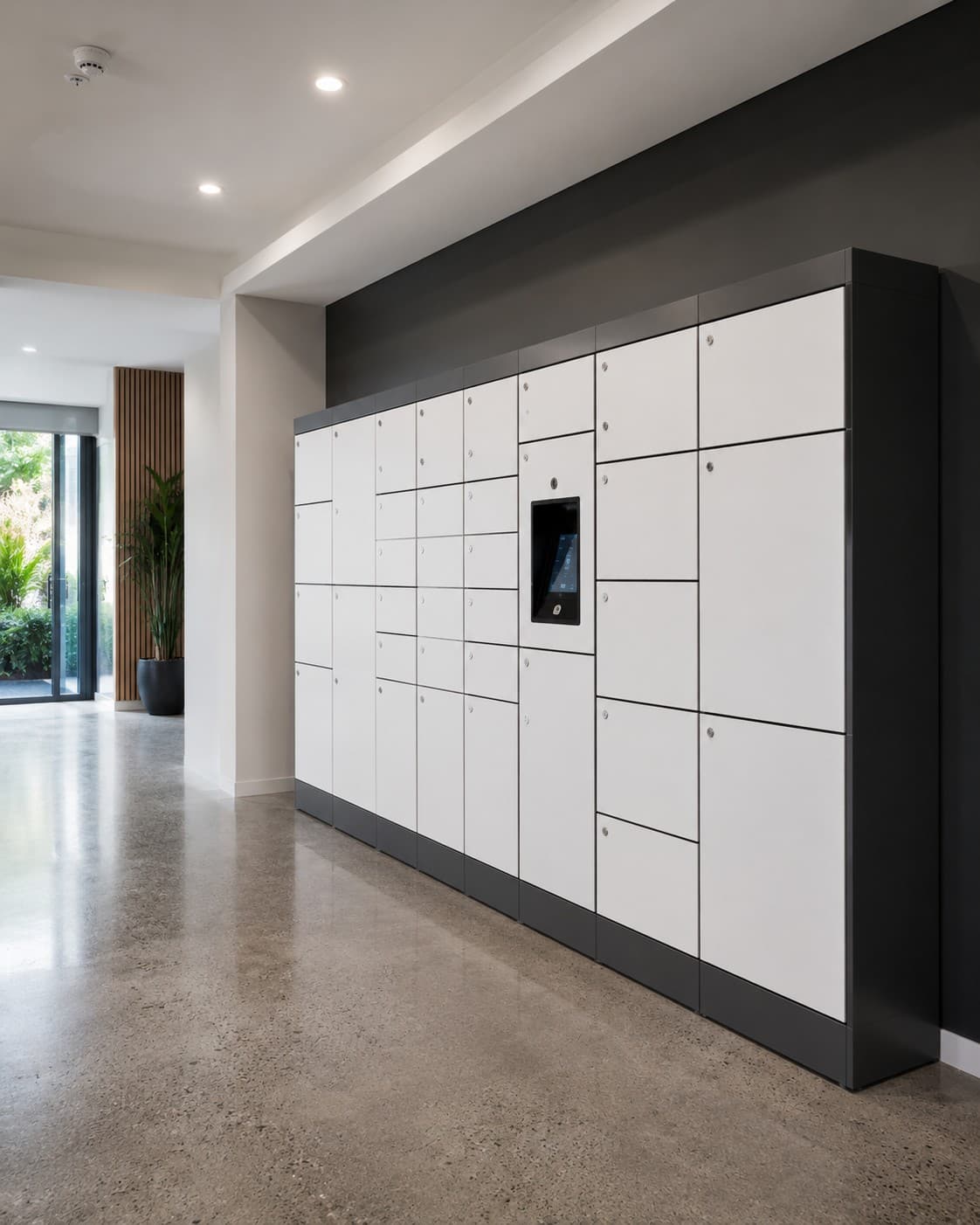
Apartment living and parcel delivery have always had an uneasy relationship. You cannot have a parcel box at your front door because your front door opens onto a corridor. The building lobby might be accessible to everyone — or locked to everyone, including your couriers. And the communal mailroom, if your building has one, is often undersized, poorly managed and surprisingly easy to access without authorisation.
The result is familiar to almost every apartment dweller. Missed deliveries. Parcels left with building managers who are not always there. Items going missing from communal areas. Constant trips to Australia Post collection points to retrieve things that should have come to you.
The good news is that the solutions have improved dramatically in recent years, and Australian property developers and strata managers are increasingly taking parcel security seriously.
The unique challenges of apartment parcel delivery
Apartments create a specific set of delivery problems that do not exist for houses. Access is the first issue — many apartment buildings require a code or intercom access, and couriers often simply leave items in the lobby or mark them as failed delivery without attempting access. Security is the second — communal spaces mean your parcel is accessible to every resident, visitor and contractor in the building. Scale is the third — in a large apartment complex, dozens of residents may be expecting deliveries on any given day, and without a managed system, the lobby quickly becomes chaotic.
Smart parcel lockers — the building-wide solution
Smart parcel locker banks are the most effective solution for apartment buildings and are increasingly being installed in both new developments and existing buildings. They work simply: a courier arrives, scans a delivery barcode, and selects an available locker. The locker opens, the parcel goes in, and the locker locks automatically. The resident receives a notification — usually via SMS or app — with a unique collection code. They come down when it suits them, enter the code, and retrieve their parcel.
The system works for any courier company — Australia Post, DHL, StarTrack, CouriersPlease, Aramex, and all the major players are familiar with smart locker delivery. And because the lockers are secured individually, there is no risk of one resident accessing another resident's delivery.
What to look for in a building parcel locker system
If you are a strata manager, property developer or building owner considering a parcel locker installation, there are several factors worth evaluating carefully.
Locker mix matters enormously. A building with 50 apartments needs lockers in multiple sizes — small compartments for envelopes and small packages, medium compartments for standard courier deliveries, and at least a few large compartments for bulkier items. Getting the mix wrong means lockers fill up quickly and the system breaks down.
Software and connectivity is equally important. The best systems integrate with all major courier platforms, send automated notifications to residents, flag uncollected parcels after a set period, and give building management real-time visibility into locker usage. Look for systems with a proven Australian track record and local technical support.
Physical installation requirements vary significantly. Some systems require a permanent power connection for electronic locks and screens. Others are modular and can be expanded as the building grows. Placement matters too — lockers should be in a location that is accessible to couriers without requiring building access, but within the security perimeter of the building.
Options for individual apartment residents
If your building does not have a communal locker system and you cannot convince your strata committee to install one, there are still options available to individual residents.
A parcel box at a private outdoor space — a balcony, courtyard or private entry — works well for ground-floor or low-rise units where couriers can access it directly. For higher floors, arranging deliveries to a nearby Australia Post parcel locker for collection at your convenience is a practical workaround, though it does require planning purchases in advance.
Some residents have also had success with courier delivery instructions — specific notes in their delivery address directing drivers to leave parcels with a trusted neighbour, at a specific location, or to call ahead. This requires consistent carriers and does not work reliably with all companies, but it reduces missed deliveries significantly for regular shoppers.
How to raise parcel security with your strata
If you want to push for a parcel locker system in your building, the most effective approach is to frame it as a building amenity rather than a security measure. Property values in apartment buildings are increasingly tied to the quality of resident amenities, and parcel management has become a genuine selling point for new developments. Gather evidence of the problem — a quick survey of residents about missed deliveries and stolen parcels is often enough to build a compelling case. Get two or three quotes from reputable suppliers and present them to the committee with a cost-per-apartment breakdown.
Many strata committees are more receptive to this conversation than residents expect, particularly in buildings where the lobby has become chaotic during peak delivery periods.
Exploring smart lockers for your building?
Get in touch to discuss parcel locker solutions for your apartment building or strata complex.